
We run a site called the Giant’s Causeway Guide, so you might expect a straightforward “yes, absolutely, go.” We think the honest answer is more interesting than that — and more useful to you before you commit a day of your trip to it.
The same year, two verdicts
In 2017, Lonely Planet named Belfast and the Causeway Coastal Route the world’s #1 best region to visit for 2018. That same year, the Irish Times ran a reader survey on the most overrated and underwhelming tourist attractions people had visited — and the Giant’s Causeway topped it, with more negative mentions than anything else in the country. Real complaints from that survey: “a very long walk for a small gathering of rocks,” and “my expectations were huge, I was seriously disappointed.”
Both things are genuinely true at once. And once you look at why, the contradiction mostly resolves itself.
Why some visitors are disappointed
The complaints cluster around a specific pattern: arriving at midday in peak summer, walking straight to the most photographed cluster of stones, taking a few photos in a crowd, and leaving within twenty minutes. Do that, and “a pile of rocks” is a fair description — you’ve seen the least interesting version of the place, at its most crowded, with the least context.
The other recurring complaint is cost — specifically, confusion between the free coastline and the paid Visitor Centre. If you expected the whole experience to be free and then hit a £15+ car park charge, that colours the visit before you’ve even reached the stones. We’ve written a full guide to visiting for free if that’s your concern — it genuinely is possible, and it’s not a loophole, it’s how the site is actually set up.
Why the Causeway consistently scores over 95% visitor satisfaction anyway
Despite the Irish Times survey, the Causeway’s actual visitor satisfaction numbers stay extremely high — comfortably over 95% by the National Trust’s own measurement. The gap between that number and the “overrated” headlines isn’t a contradiction; it’s the difference between people who did the twenty-minute drive-by and people who didn’t.
What genuinely changes the experience:
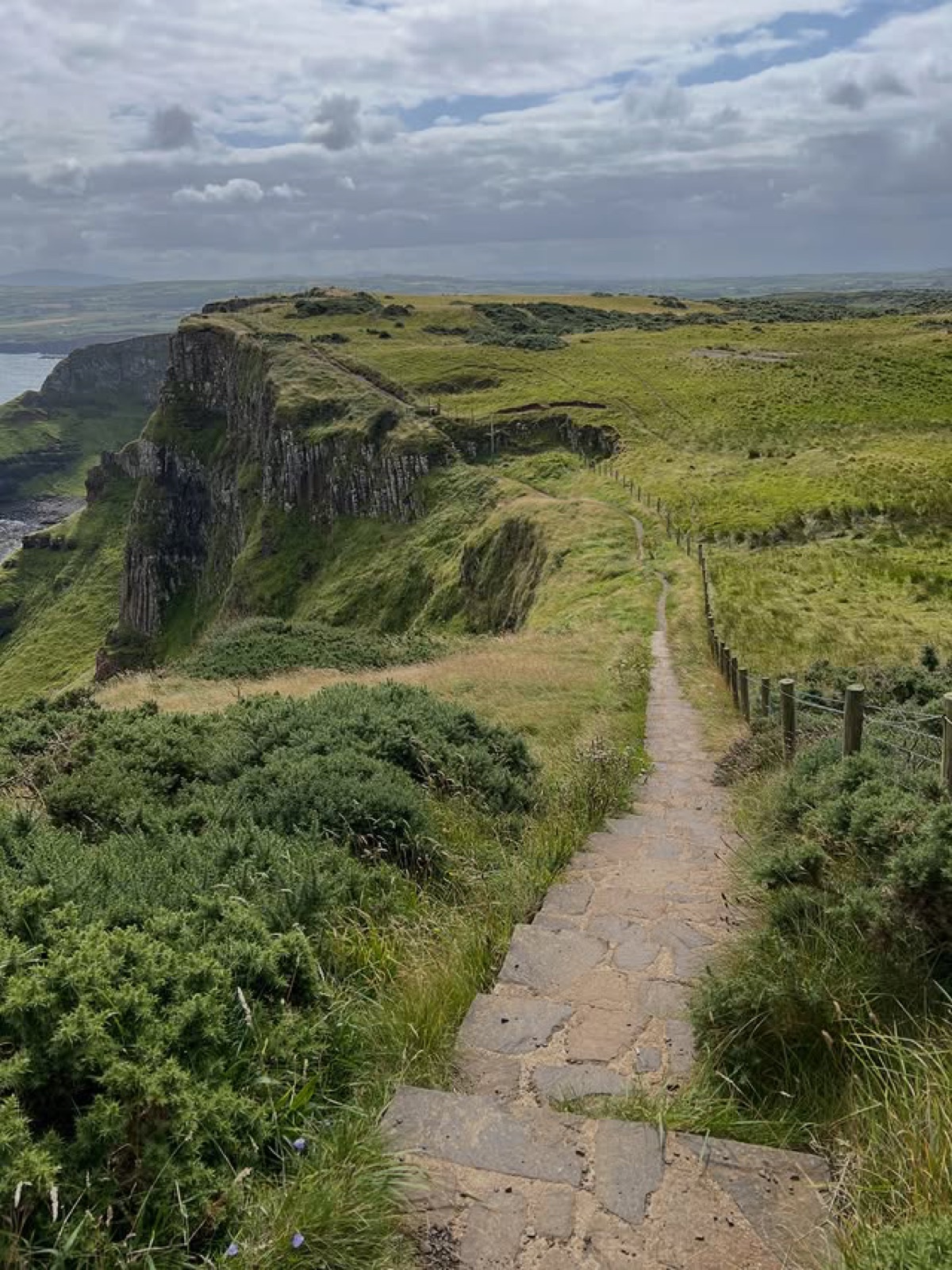
- Walk further than the main cluster of stones. The Red Trail — the clifftop path above the Causeway — is consistently the most underrated part of a visit. Most people never leave the lower path.
- Go early or late, not midday in July. The stones themselves don’t change, but having them without three coach tours’ worth of people around you genuinely does.
- Know the science and the story before you go, rather than reading it off a board while a crowd pushes past. Our geology and myths & legends pages cover both properly.
- Pair it with something else nearby. On its own, in a rush, the Causeway is “an hour, some rocks.” Combined with Dunluce Castle, Ballintoy Harbour, or Carrick-a-Rede — all a short drive away — it’s the anchor of a genuinely excellent day, which is closer to what the Lonely Planet recognition was actually about in the first place.
Our honest recommendation
If you’re passing through the area with an hour to spare and no interest in walking further than the car park, you might come away thinking the Irish Times had a point. If you give it half a day, walk the Red Trail, and treat it as one stop on the wider coastal route rather than the whole trip — which is what our own Causeway Coastal Route guide is built around — it earns the reputation Lonely Planet gave it.
It’s a UNESCO World Heritage Site because of the geology, not the marketing. Whether it’s worth your specific day depends entirely on how much time you’re willing to give it.