
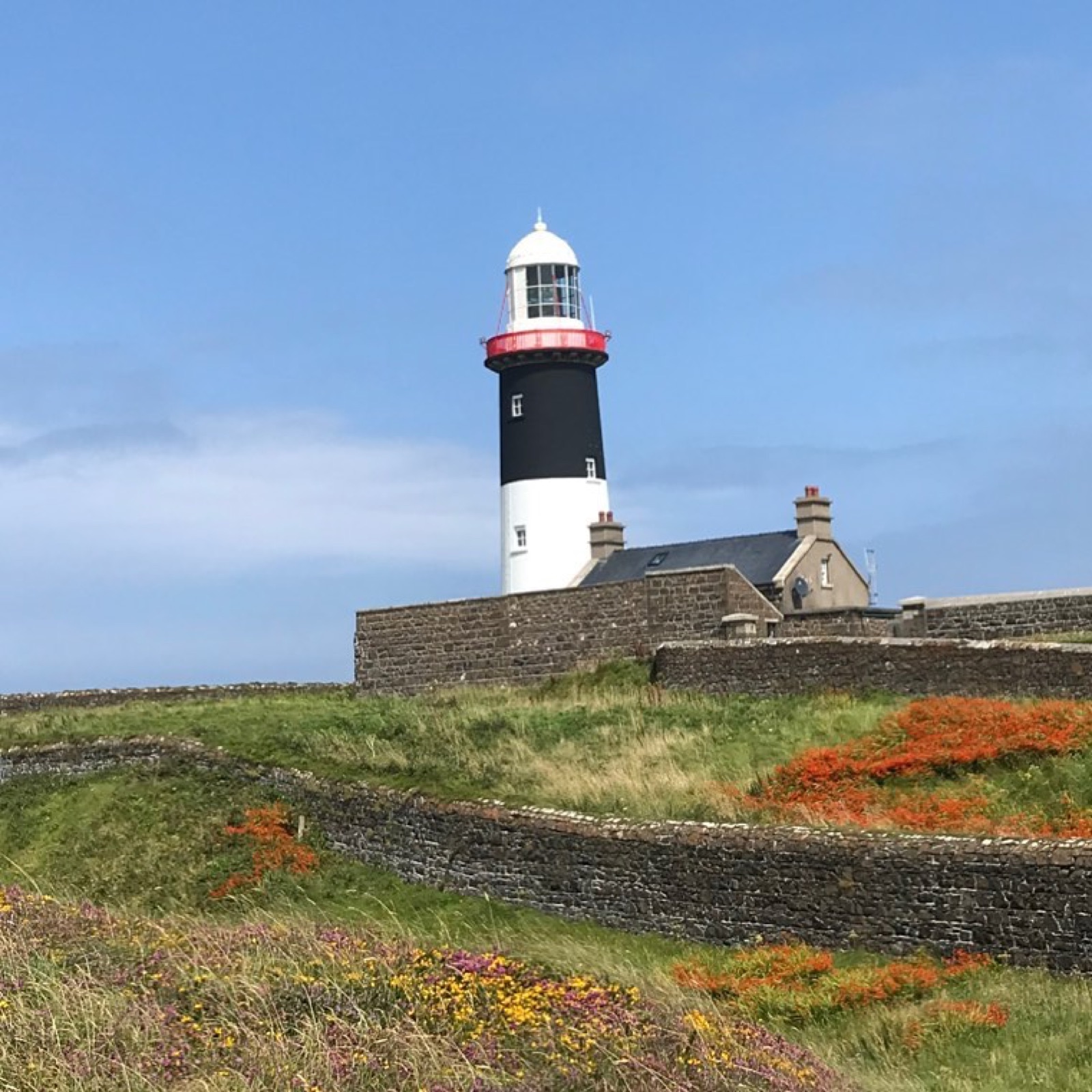
If you’re making the trip out to Rathlin Island, it’s worth knowing that this stretch of water carries a genuinely significant piece of communications history — one most visitors never hear about, because there’s nothing left to look at beyond a cottage and a lighthouse.
The experiment
In summer 1898, Guglielmo Marconi — the Italian physicist who’d go on to share the 1909 Nobel Prize in Physics for his work on wireless telegraphy — sent his assistant George Kemp to Ballycastle to establish a wireless link across to Rathlin Island. Kemp recruited the Rathlin East Lighthouse keeper and his sons as operators on the island side, while Marconi’s equipment on the mainland worked from a cottage on Kenmara Road, a few miles from Ballycastle seafront — now known simply as Marconi’s Cottage.
This wasn’t an academic exercise. Sir Henry Hozier, secretary of Lloyd’s of London, had contracted Marconi directly to build a working wireless link between Rathlin and Ballycastle — one of the first genuinely commercial applications of wireless technology anywhere in the world, financed by the insurance industry’s very practical interest in faster shipping communications. The contract mattered enormously to Marconi’s career: real income, and recognition as the leading figure in an entirely new technology, at a point when most people had no reason to believe it would work at all.
What’s there today
Marconi’s Cottage was never taken into public ownership and was eventually sold privately — it’s somebody’s home today, so there’s nothing to go inside and see. It remains a striking, genuinely windswept spot on the walk out from Ballycastle, and worth a look from the outside if you’re in the area, even without anything to visit.
Getting there: the cottage sits on Kenmara Road, about a three-mile walk from Ballycastle seafront. If you’re making the trip out to Rathlin itself, the ferry departs from Ballycastle Harbour — see our Rathlin Island page for the crossing, the puffins, and Bruce’s Cave.