

Between Ballycastle and Cushendall, in Ballypatrick Forest, sits one of the strangest natural features on this whole coast — a lake that can genuinely disappear within hours, then reappear just as quickly. It’s not a legend or a trick of the light. It’s real, well-documented geology.
How it actually works
The hollow Loughareema sits in is a chalk sinkhole, buried under a layer of basalt and topped with peat — the same Cretaceous chalk that forms the white cliffs at Whiterocks Beach and underlies the basalt columns at the Giant’s Causeway itself. The basalt is largely waterproof, made more so by the peat above it, but the lake bed has a hole through to the porous chalk below. Normally, water drains steadily away through this “plug hole” into a network of submerged passageways in the chalk — which is why there’s often no lake here at all. After heavy rain, peat washed into the run-off can temporarily block the hole, and the lake fills. When the blockage clears, it drains away again, sometimes within hours. About 2.5km northwest, a strong spring feeds the River Carey — the point where Loughareema’s water eventually resurfaces.
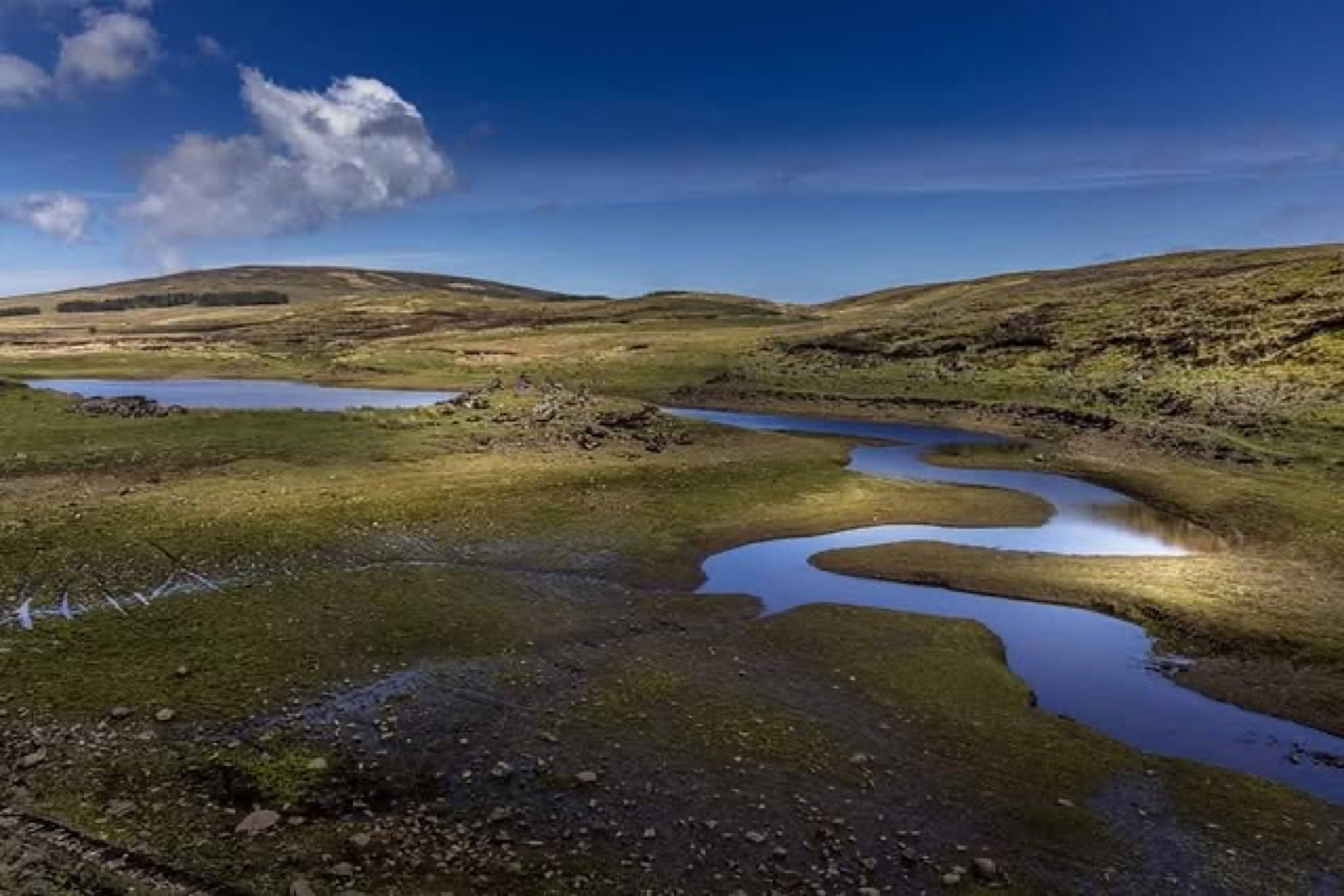
The photos above show the difference directly — one taken with the lake full, the other mid-drain, sometimes just days apart depending on the rain.
The ghost story
Local tradition holds that a horse-drawn carriage and its occupants drowned crossing the lake in the 19th century, and that their ghosts haunt the shoreline on nights when the lake is full. The story has a real, specific tragedy behind it: Colonel John McNeill drowned crossing Ballypatrick mountain on 30 September 1898, travelling to Ballycastle railway station after a night spent in Cushendun with his cousin, Captain Dan McNeile — pressing on despite days of torrential rain.
Visiting
Loughareema sits right beside the main coast road (the A2) between Ballycastle and Cushendall, so it’s an easy stop rather than a detour — though whether you’ll actually see a lake at all depends entirely on recent weather. That unpredictability is most of the appeal.