
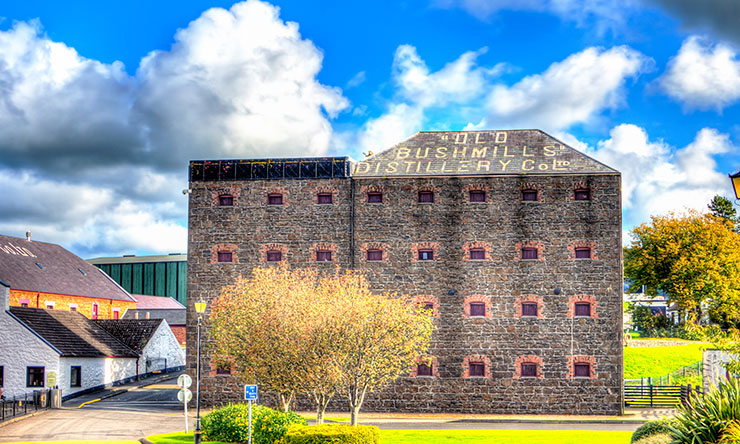
Situated on the Causeway Coast, Bushmills is a small village just 2 miles north of the Giant’s Causeway. The centre of the town feels like a step back in time, reinforced by the Old Bushmills Distillery and its ancient shop frontages. Bushmills has the most historic listed buildings of any village or town in this part of County Antrim — 12 miles from Ballycastle and 7 miles from Coleraine.
Getting to Bushmills from Belfast
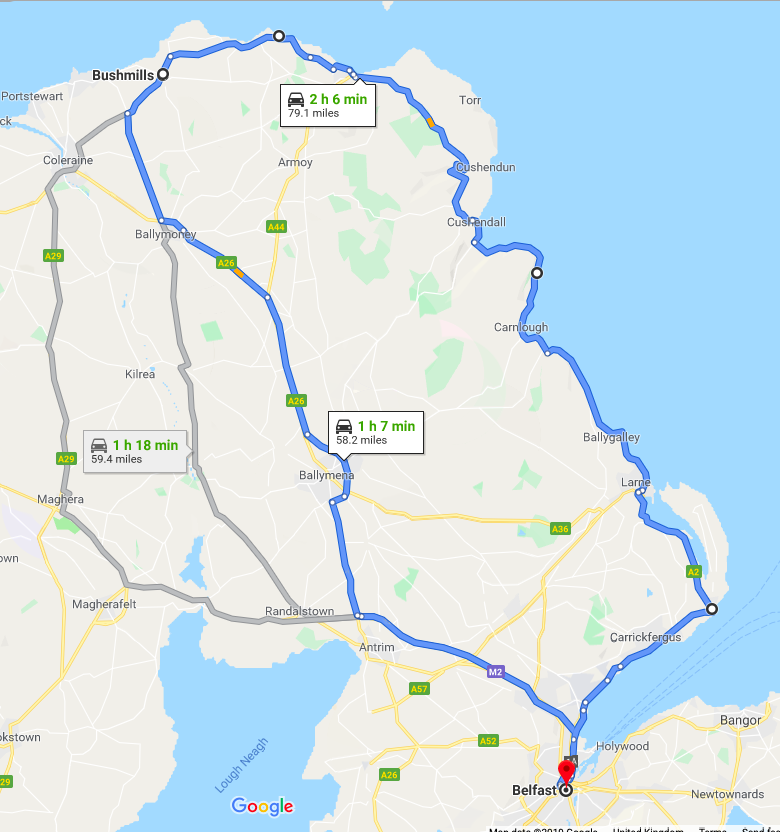
There are two real ways to make the trip, and which one you pick should depend on how much of the day you want to spend on the road rather than at the coast.
The quick route follows the A26 north out of Belfast through Ballymena and Ballymoney before picking up signs for Bushmills — about 58 miles, and just over an hour with no stops. This is the one to take if you’re tight on time or driving up early to beat the crowds at the Causeway.
The scenic route — and the one we’d actually recommend if you can spare the extra hour — follows the A2 the whole way, through Carrickfergus, Larne, and along the Antrim Coast Road to Cushendall and Ballycastle before reaching Bushmills. It’s around 79 miles and closer to two hours, but this is the world-renowned Causeway Coastal Route itself, regularly ranked among the best coastal drives anywhere — cliffs, glens, and sea views the whole way, not just a means of getting there. If you’ve got a full day and this is a once-in-a-while trip, take the long way round. For full turn-by-turn directions and public transport options, see our getting to the Giant’s Causeway page.
The mills on the River Bush
Bushmills got its name in the 17th century from the River Bush, which rises in the Antrim Hills and flows to Portballintrae, where it meets the Atlantic. The mill was powered by this river in those days. Main Street, the narrow central road through the village, is lined with historic listed shops and houses, leading to “The Diamond” — the town’s war memorial at its heart. The MacNaghten family of Bushmills House reinvented Bushmills as a market village in the 1820s, formally established in 1828, with the Market Square forming around 1840. Seven active water-powered mills once ran along the river.
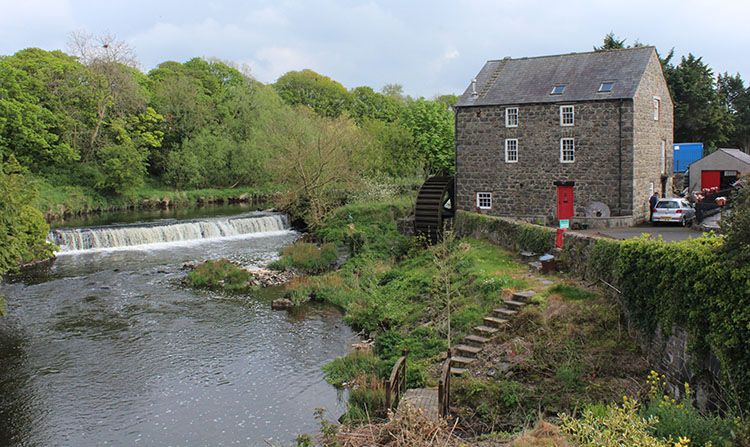
One of the surviving mills is locally known by two names depending who you ask: built around 1816 for a former owner, James Curry, it’s still called Curry’s Mill by longtime residents, even though the building itself now carries a “Bonner Mill” nameplate. Same mill, two names — it ran as a working corn mill until the early 1950s before being converted to a private residence in the 1990s.
Old Bushmills Distillery
Bushmills had five licensed distilleries in 1788. The Old Bushmills Distillery Company Limited — where Bushmills Irish whiskey (not whisky; that’s Scottish) is still distilled today — remains a major visitor attraction. The first licence to distil in the area was granted in 1608 by King James I & VI, making Bushmills the oldest licensed distillery in the world by the commonly cited account. The current distillery building dates to the Victorian era, built in the late 1800s. Tours run regularly, walking visitors through triple distillation and single malt production.
Bushmills produces a range of whiskeys, including Bushmills Original — a smooth, versatile triple-distilled blend matured in bourbon and sherry casks, giving fresh fruit and vanilla notes — and Black Bush, a high-malt content whiskey matured in Oloroso sherry and bourbon casks, prized by seasoned Irish whiskey drinkers for its rich, fruity depth.
The Giant’s Causeway & Bushmills Railway
The narrow-gauge railway winds through the dunes above Runkerry Strand on its 15–20 minute journey between Bushmills and the Giant’s Causeway — a real treat for train enthusiasts and a memorable trip for visitors of any age. Full detail on our railway page.
Places of interest in Bushmills
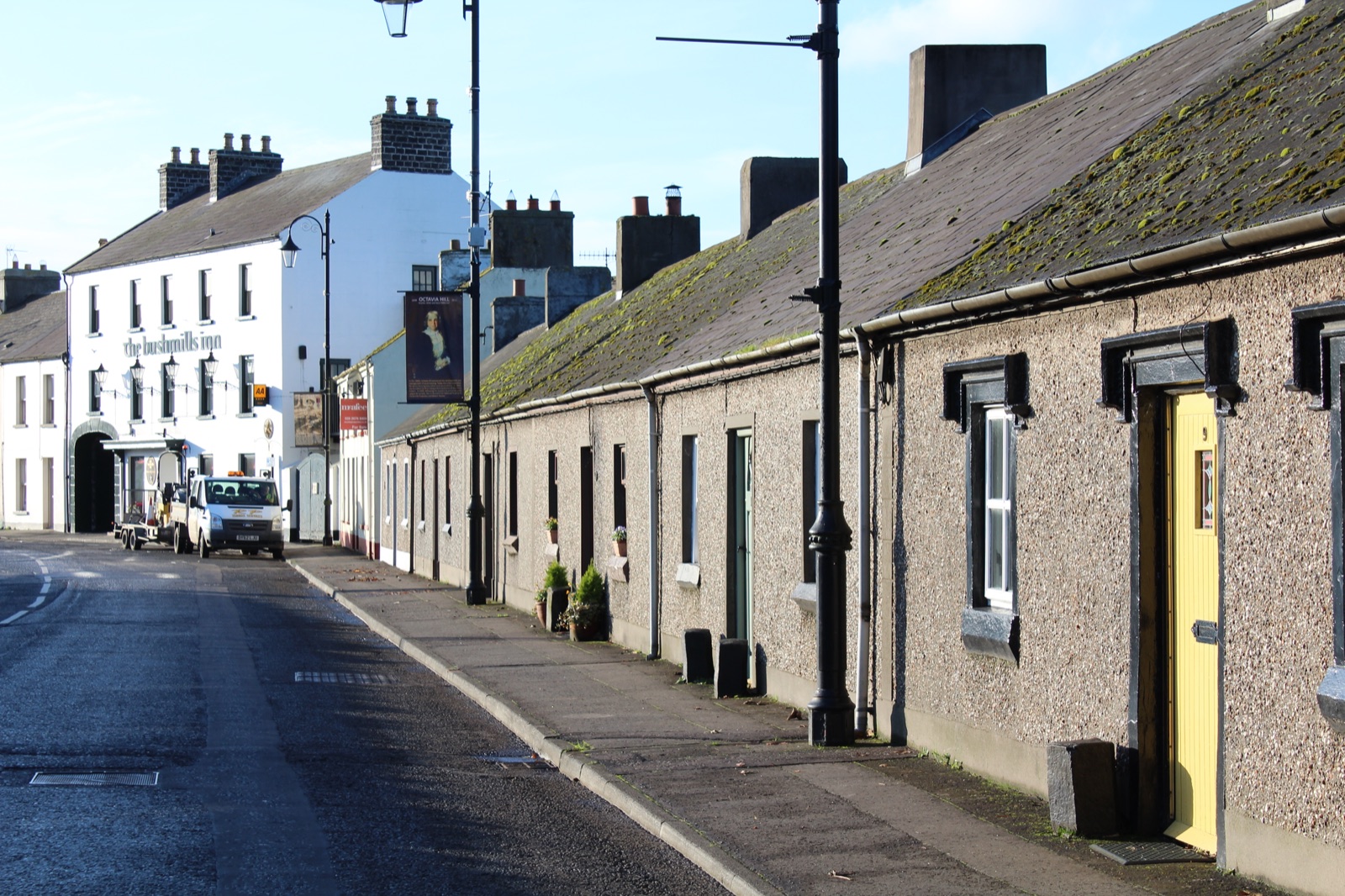
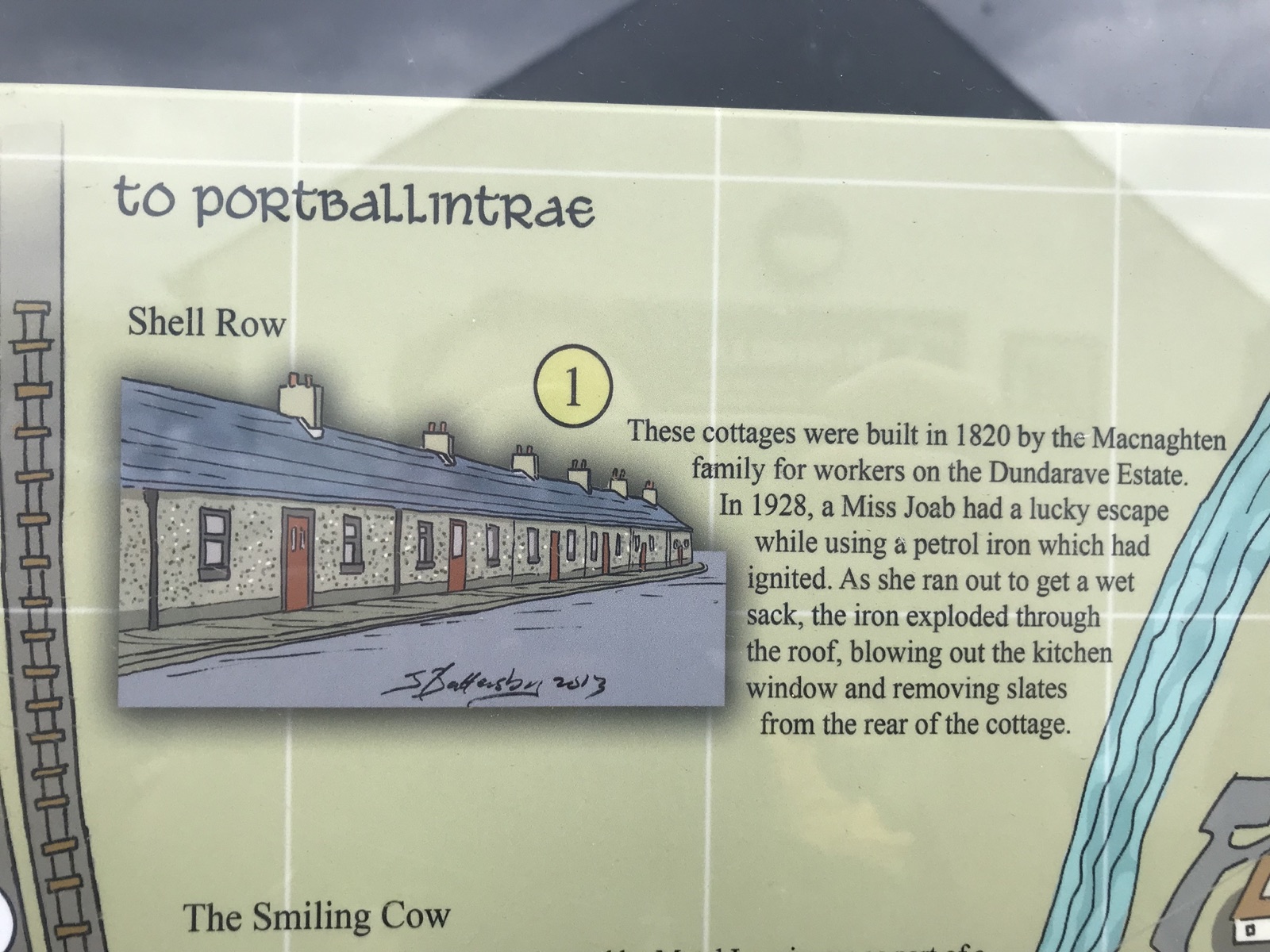
Shell Row — seven cottages built in 1820 by the MacNaghten family for workers on the Dundarave Estate, home over the years to nail makers, farm hands, and mill workers. Look closely at the windows: the lintel under each one is a genuine hexagonal column of Causeway stone, believed to have come from the Giant’s Causeway itself, and a couple of the cottages have stones outside the front door too. The row has its share of local stories — in 1928, a Miss Joab had a lucky escape when a petrol iron she was using ignited and exploded through the roof, blowing out the kitchen window and taking slates off the back of the cottage.
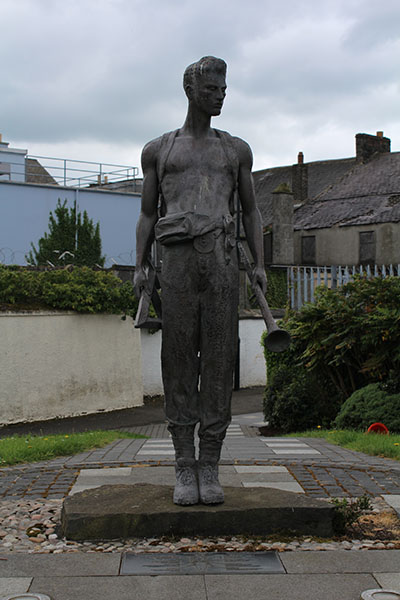
The Alphabet Angel — a bronze sculpture created in 2004 by artist Ross Wilson with the local community, representing the Ulster-Scots dialect — the first bronze sculpture anywhere in the world to celebrate it.
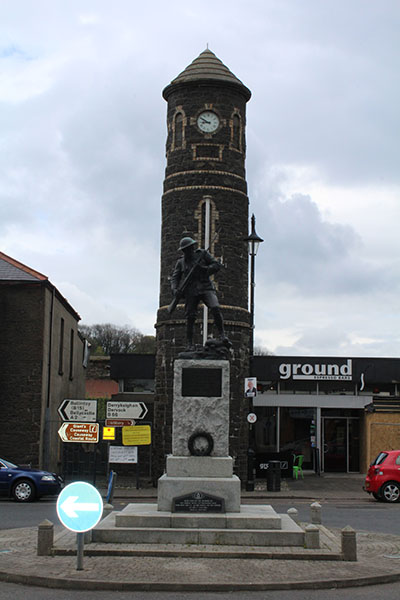
The Market Square & Clock Tower — built by the MacNaghtens around 1840 as the focal point of their new market town, and the site of the twice-yearly hiring fair. The clock tower is modelled on a classic round tower, built in 1874.
The War Memorial — stands in the Market Square, commemorating those from Bushmills lost in both World Wars, with a special plaque for Sergeant Robert Quigg, who won the Victoria Cross at the Battle of the Somme. The sculpture atop the memorial was created by Charles Hartwell ARA and unveiled in 1921.
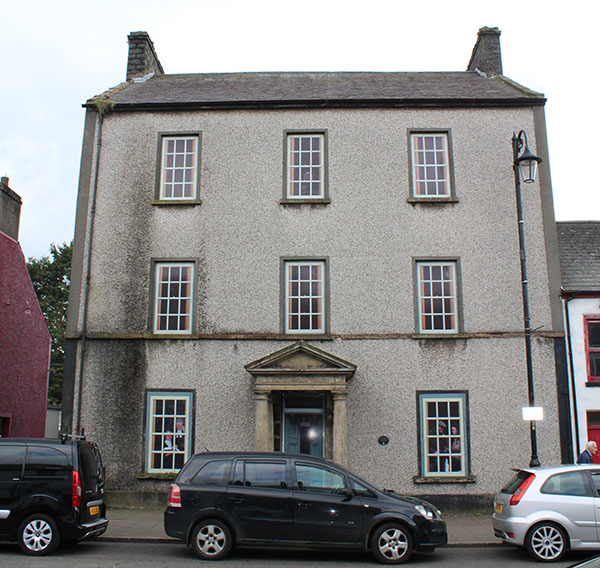
The Courthouse — built in 1834 as a centre for local authorities, with police apartments and jail cells, used for petty sessions well into the 20th century. A local enterprise agency received a £5.1 million grant in 2019 to redevelop it into a creative-industries hub.
The Mills — Palmer and Bonner Mills are the only surviving corn mills on the River Bush, both carefully restored with working water wheels. At its peak, seven water-wheel-driven mills ran in Bushmills; the last ceased in the 1960s.
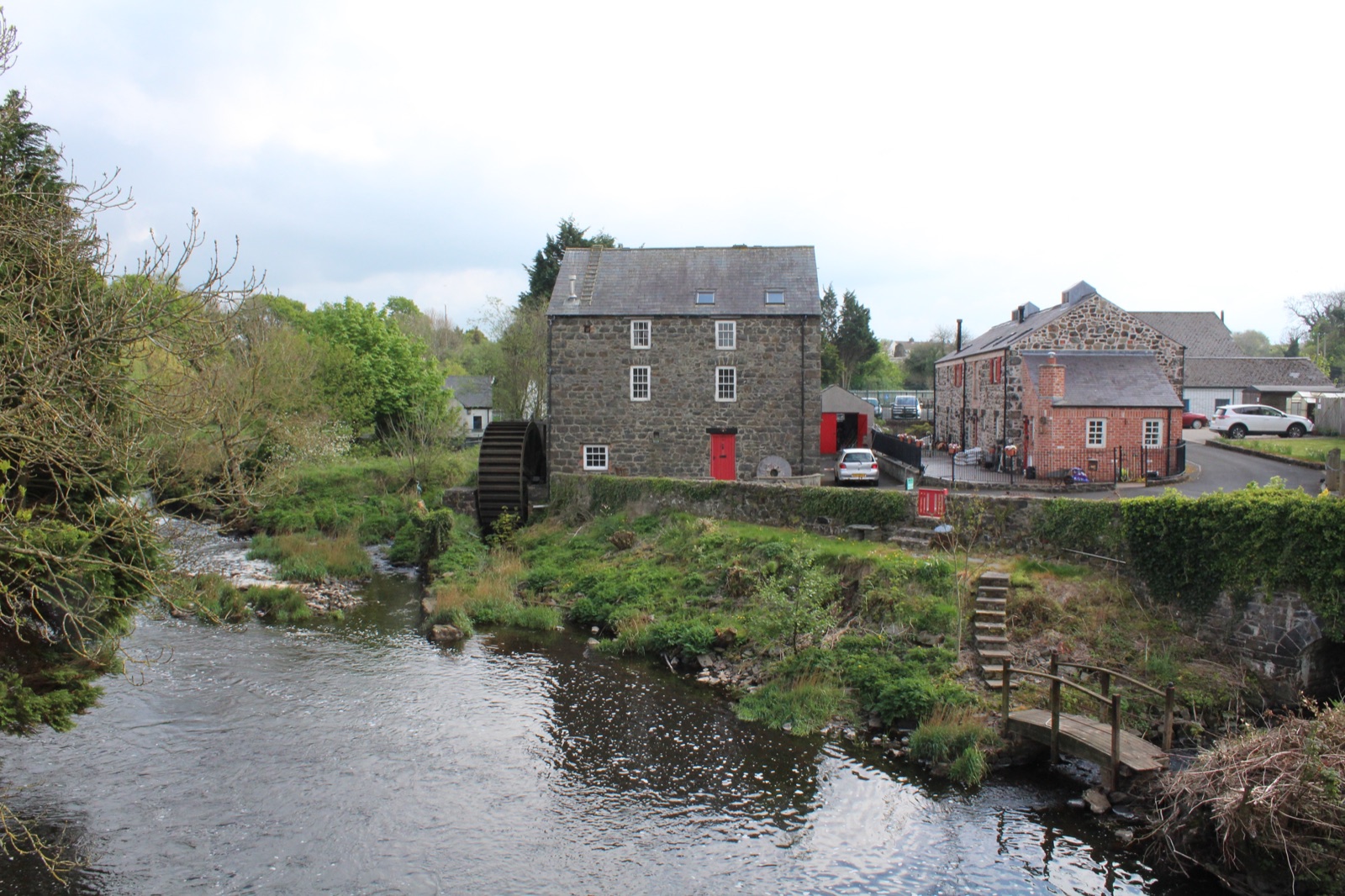
The Salmon Fishery — since the early 1970s, the Bushmills Salmon Research Station has monitored the salmon population in the River Bush, and is now an internationally recognised research facility for long-term salmon stock data.
Bushmills Memorial School — built in 1927, designed by architect Clough Williams-Ellis, who served with the Welsh Guards and Royal Tank Regiment in the First World War and was awarded the Military Cross. He went on to design several prominent war memorials of the era. He’s best known for creating Portmeirion in Snowdonia, Wales — used as the filming location for the 1967 cult TV series The Prisoner, starring Patrick McGoohan.
Sergeant Robert Quigg VC
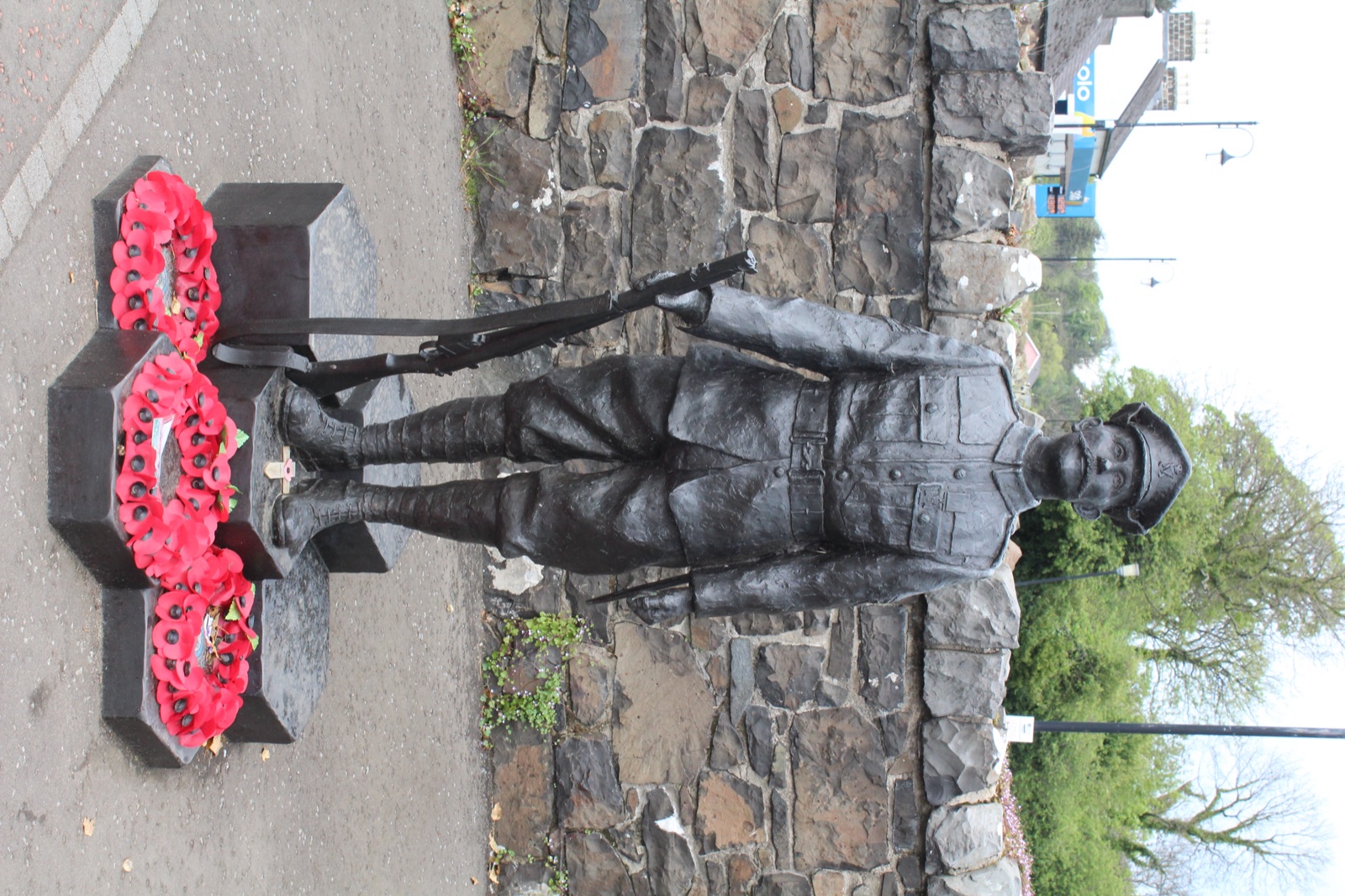
The name on the War Memorial plaque above belongs to the most decorated man Bushmills has ever produced. Robert Quigg was born on 28 February 1885 in Ardihannon, in the parish of Billy, a few miles from the village — and before the First World War, he worked on the MacNaghten family’s Dundarave Estate, the same estate whose name comes up again and again around Bushmills, from Shell Row to the Market Square.
He enlisted in the 12th Battalion, Royal Irish Rifles, shortly after war broke out in 1914. On 1 July 1916 — the first, catastrophic day of the Battle of the Somme — Quigg advanced with his platoon three times under heavy fire. The next morning, hearing that his platoon officer, Lieutenant Sir Harry Macnaghten of the same Dundarave family, was lying wounded somewhere in no man’s land, Quigg went out seven separate times to find him, each trip under shell and machine gun fire. He never found Macnaghten. But he brought back a different wounded man on every single trip, the last one dragged in on a waterproof sheet from within yards of the enemy’s wire, before he was finally too exhausted to continue.
For this, he was awarded the Victoria Cross — the highest award for gallantry the British and Commonwealth armed forces can give. Lady Macnaghten later presented him with a gold watch in recognition of what he’d done trying to save her son.
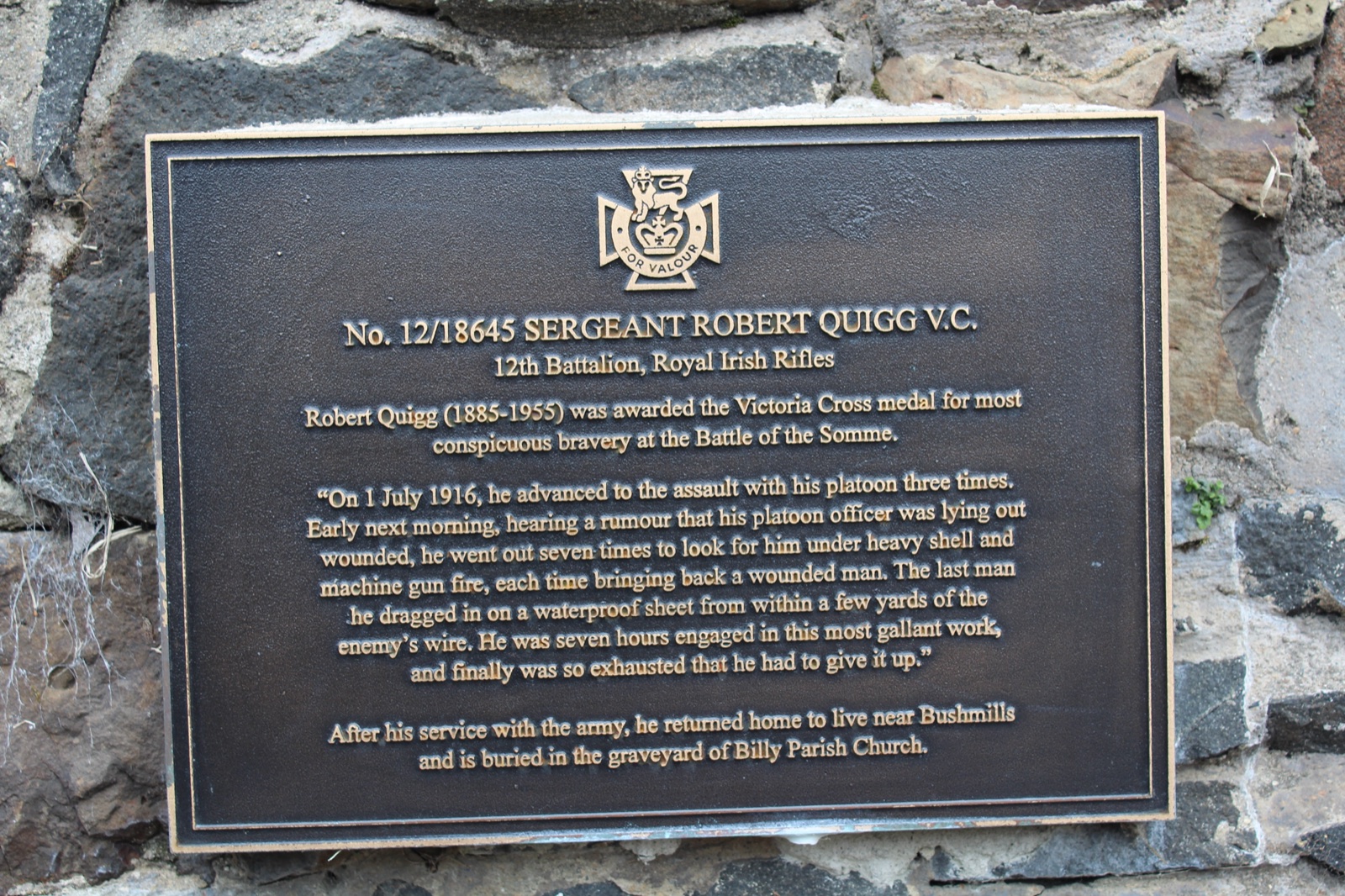
Quigg returned to live near Bushmills after his service and died on 14 May 1955, aged 70. He’s buried in the graveyard of Billy Parish Church, close to where he was born.
Places to eat in Bushmills
The Bilberry Mill Cafe — on the High Street, directly across from the Park & Ride to the Giant’s Causeway. A genuinely good spot for a cuppa on a damp day or pavement seating in the sun, with both traditional and contemporary dishes on the menu. Dogs welcome.
The French Room, at the Bushmills Inn — oak-panelled walls and peated wood fireplaces next door, and one of Northern Ireland’s better spots for fine dining, Sunday lunch, or afternoon tea, with a nod to the area’s French Huguenot heritage.
Broughgammon Farm — on the way toward Ballycastle and the Glens of Antrim, a working farm shop and cafe run by Becky and Charlie Cole, selling locally sourced meat and produce, with cookery courses if you want to learn more. Worth the stop to see the goat herd, too.
More options — including full addresses, phone numbers, and further afield — are on our places to eat page.
Places to stay in Bushmills
The Bushmills Inn — a 17th-century coaching inn updated into an upmarket boutique hotel that’s kept its original character, from a hayloft snug double through to rooms with four-poster beds. The distillery is a short walk away, and the Inn has its own cinema.
Check availability on Expedia →
Causeway Country Pods — five minutes outside Bushmills in open North Antrim countryside, for something a little different: heated glamping pods for two, each with an en-suite shower room, a cosy seating area, and a kitchen corner. One pod has its own hot tub. Not on the big booking platforms — book directly.
Check availability on their site →
Aurora North Coast — four luxury log cabins about 1.5 miles from both Bushmills and the Giant’s Causeway, each with its own hot tub and genuinely dark-sky views inland from the coast. The pick if you want something more private and self-contained than a hotel room.
Check availability on Expedia →
More options, including hotels in Portrush, Portstewart, and Ballycastle, are on our places to stay page.